NAKAKITA SEISAKUSHO CO., LTD.

About Us

  1. Home
  2. About Us
  3. NAKAKITA History

NAKAKITA History

1.Before and during the war1930-

Benzo Nakakita, the first president, founded Nakakita Seisakusho

In May 1930, Nakakita Seisakusho was established in Matsugae-cho, Kita-ku, Osaka City as a house and factory. It was a small private organization with only a few employees. The first products were automatic control valves such as automatic float switches and pressure switches, which marked the beginning of Nakakita's history of automation.
Benzo went on to develop new products one after another, acquiring dozens of patents and utility models. The reputation of "B-N" products, named after Benzo's initials, grows and the foundation of Nakakita Seisakusho is solidified.
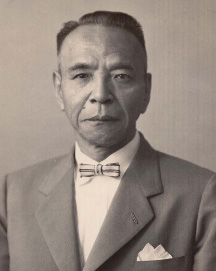
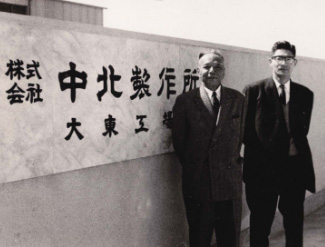
Benzo Nakakita, first president
New factory built in Gamo-machi, Joto-ku, Osaka.

In May 1937, the factory was moved to Imai-cho, Kita-ku, Osaka City, and the company was incorporated. 1939, with the steady expansion of business, the existing factory became too small and a new building was planned. In June, a new company building and a new factory in Gamo-cho, Joto-ku, Osaka were completed.
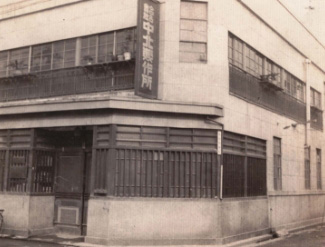
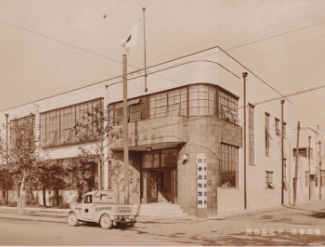
Factory in Imai-cho
Factory in Imai-cho
New company building and new factory in Gamo-cho
World War II

In 1939, World War II broke out. Nakakita Manufacturing was also included in the wartime regime and designated as a naval controlled factory in 1942. The company was ordered to manufacture valves for transport ships, mainly cast iron and steel stop valves, and at its peak, nearly 1,000 employees were engaged in production.
2.Postwar period1945-

Making a comeback after the postwar turmoil

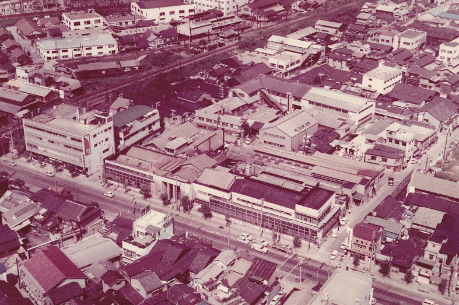
With the end of the war in 1945, the factory was removed from the designation as a Navy-managed factory. Many castings were piled up in the back aisle of the factory. The number of employees at this time was about 80. In the chaotic postwar period, there was no demand for valves, and the company continued to struggle to survive by doing jobs that were not its core business, such as making wooden sewing machine stands and selling popsicles. The core of the reconstruction of Nakakita Manufacturing was led by young people who had returned from military service.

Around 1952 Nakakita main factory after the war
Riding the winds of the times to rebuild the company

In 1950, the Tokyo Sales Office was reopened and the Kyushu Branch Office was opened, and the company embarked on a rebuilding effort. Due to the special procurement demands of the Korean War that occurred in the same year, the company received large orders from the U.S. military for radiator valves, radiator traps, expansion joints, and other products that had been manufactured before the war. Furthermore, the company received a large order for heating steam traps for barracks on the Korean peninsula through a bidding process, bringing the plant back to life.
Around 1952, the company began manufacturing valves for marine vessels in line with the start of construction of large ships in Japan. The shipbuilding industry also experienced a revival, and demand for marine products grew. Around 1954, Japan entered a period of rapid economic growth. The shipbuilding industry also experienced a revival, and demand for marine products grew, and the company began to expand into the electric power industry.
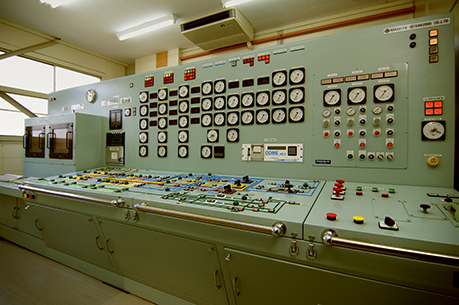
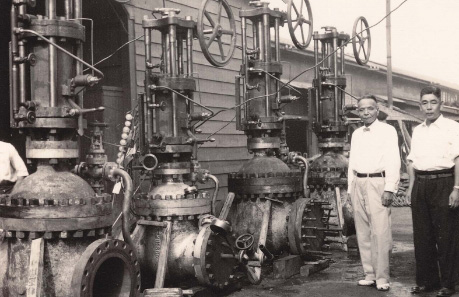
In 1958, Nakakita was designated as a factory under the "Specific Machinery Promotion Law," and with a loan from the Development Bank of Japan based on the recommendation of MITI, it installed a supercritical pressure boiler for testing valves for high-temperature, high-pressure applications, and enhanced its facilities with state-of-the-art machine tools and inspection equipment.

Around 1952 Large gate valve for power plants
New factory built in Daito

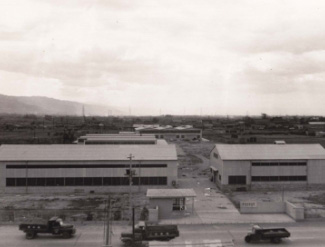
On the occasion of the 30th anniversary of the company's founding in May 1959, a site was purchased in Daito City as a site for plant expansion. In November 1960, the first phase of construction of the Daito Plant was completed, and the machine shop was put into operation. In October of the following year, the second phase of construction of the Daito Plant was completed, and the plant went into operation as an assembly plant.

In 1960 The first phase of the plant was completed.

3.High economic growth1963-

Becoming a leading company in fluid control systems

Becoming a leading company in fluid control systems In 1963, the company developed a rubber-lined butterfly valve. Until then, valves called gate valves had been used in tanker oil loading lines, but the Company devised a revolutionary butterfly valve with a rubber seat that achieved zero leakage, making it possible to build large tankers of 250,000 to 300,000 tons.
In 1965, after the death of Benzo Nakakita, the first president, Hiroshi Nakakita became the new president. Following the founder's prediction that "the future belongs to automated machines," Nakakita strives to develop fluid control systems centered on valves. Predicting an increase in demand for tankers, he develops remote-controlled equipment for tankers, butterfly valves, and float level gauges. "Frontier Spirit" remains Nakakita's company motto to this day.

Remote Control System
Becoming a Pioneer in Marine Fluid Control Systems

In 1970, Nakakita developed remote control devices for butterfly valves on cargo lines and ballast lines in response to the increasing size of tankers, and expanded its business as a manufacturer capable of supplying comprehensive valves and systems.
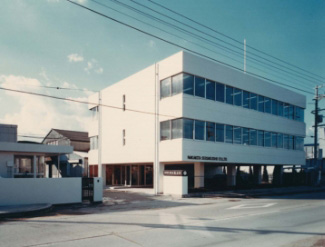
In 1970, with the completion of the new Daito Plant, the company completed the consolidation of its plants. The following year, the company achieved its long-sought listing on the Second Section of the Osaka Securities Exchange, and undertook various operational reforms, including quality improvement, development of production systems, and construction of a new company building in the Daito Plant to unify operations.

New office
New office
The Challenge of Quality Control

In 1979, the American Society of Mechanical Engineers (ASME) approved the use of the "ASME V and UV Stamp (Stamp for Safety Valves and Safety Relief Valves)," establishing our approach to quality control systems. In 1985, the company introduced NAPS (NAKAKITA Production Control System), a production control system using a large computerized production control system, to centrally control complex order production management and improve efficiency and reliability. Design Assist System (NADAS) was introduced in 1988 to improve design efficiency and reliability.
In 1991, a computer-controlled remote control device was developed and became a hit product. In addition, since conventional valves were operated by hydraulic signals, but oil leakage from piping would lead to marine pollution, the company began supplying small electric actuators, contributing to consideration of the marine environment.
In 1994, LRQA, a certification organization, accredited the company's quality system for product design and manufacturing based on the international standard (ISO9001).

4.Stable Period1997-

Nakakita brand expanded worldwide.

With the bursting of the "bubble economy" in 1991, the Japanese economy entered a period of low growth, also known as the "lost 20 years". In 1997, Osamu Nakakita was appointed as the third president.
In the 2000s, the economic development of China and other emerging countries led to a significant increase in marine cargo movement and a rush of shipbuilding, resulting in an increase in orders for marine products. The Nakakita brand expanded worldwide.
In 2004, Kenichi Nakakita was appointed as the fourth president, and in 2005, in collaboration with other companies, developed a high-response actuator for fuel control valves for gas turbines, successfully upgrading the product for onshore plants. Since the following year, the company has worked on various product developments, including the joint development of an ultra-low temperature butterfly valve for LNG carriers and cargo lines.

Toward Further Development

In 2008, NAPS, a conventional production management system, was revamped to improve production efficiency as a "visible production management system" that can flexibly respond to delivery date management based on data analysis and individual order production.
In 2015, a 5-axis vertical machining center was introduced, and a human-collaborative robot was introduced for dimensional measurement of complex one-of-a-kind parts, and research is underway to improve machining productivity and realize next-generation production equipment.
In 2018, the existing "Technology Development Office" will be developed into the "Research and Development Office" to start elemental research leading to the development of new products and new businesses. Through a wide range of research, we are taking on the challenge of creating future business opportunities. The spirit of the company motto "Frontier Sprit" is passed down from generation to generation as new innovations.